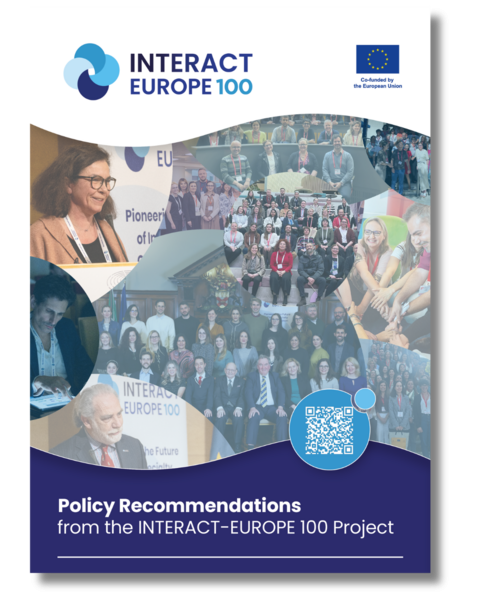
Policy Recommendations from INTERACT-EUROPE 100
As cancer care becomes increasingly specialised, true collaboration between healthcare professions is more important than ever. Yet professional silos, workforce shortages and inequalities in access to training still limit coordinated, person-centred cancer care across Europe.
INTERACT-EUROPE 100 has demonstrated how inter-speciality cancer training can help overcome these barriers, bringing healthcare professionals together to learn from one another, strengthen collaboration and improve the coordination of care.
Building on this experience, this new report examines the project's achievements, lessons learned and opportunities for lasting change. It sets out recommendations for European and national decision-makers to embed inter-speciality training within healthcare systems and establish interdisciplinary collaboration as a recognised standard of high-quality cancer care.
A European success story
Through a common training framework developed by the cancer community, for the cancer community, INTERACT-EUROPE 100 has demonstrated that inter-speciality education can be delivered at scale across different healthcare settings, professions and countries.
The project in numbers:
- 115+ cancer centres participating across Europe
- 1,200+ healthcare professionals reached
- 27 European countries involved
- 9 Train-the-Trainer events organised
- 7 languages in which training materials are available
Beyond these achievements, the project has fostered mutual understanding between cancer professions, promoted person-centred care and established a practical model for strengthening interdisciplinary collaboration across Europe.
Turning achievements into lasting change
Drawing on interviews with experts and stakeholders involved in INTERACT-EUROPE 100, the report identifies the opportunities and challenges of expanding inter-speciality training across European healthcare systems.
Its policy recommendations call for action to:
- Embed inter-speciality cancer training within European quality and accreditation frameworks.
- Integrate inter-speciality education into national cancer policies, workforce strategies and professional education frameworks.
- Recognise inter-speciality training as part of professional development, including through educational credits, flexible learning opportunities and protected training time.
- Reduce inequalities in access to training, particularly in underserved regions and healthcare settings with fewer educational resources.
- Secure the long-term sustainability of the European training curriculum, ensuring regular updates and continued collaboration between cancer professions.
These recommendations provide a roadmap for transforming the achievements of INTERACT-EUROPE 100 into lasting improvements in how cancer professionals learn, collaborate and deliver care.
The next step is to translate this European success story into sustainable policy commitments.