EU Biotech Act: Close the Gap Between Scientific Discovery and Patient Access
As the European Parliament advances its work on the EU Biotech Act, leading cancer and rare disease stakeholders have warned that the legislation will determine whether Europe’s scientific excellence translates into timely and equitable access to treatment, or existing disparities become entrenched.
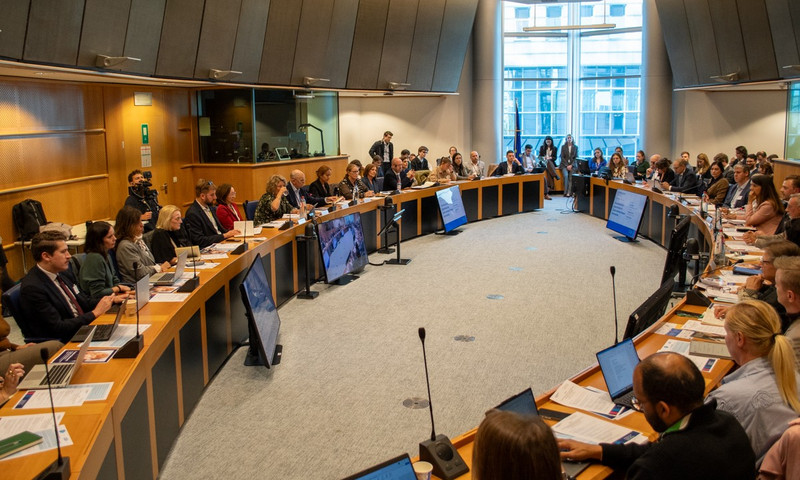
On 12 October, the European Parliament Intergroup on Cancer and Rare Diseases convened an expert dialogue with Stine Bosse MEP, Shadow Rapporteur and Co-Chair of the Intergroup, and Vytenis Andriukaitis MEP, Rapporteur on the EU Biotech Act and Intergroup Member.
The exchange brought together researchers, clinicians, patient representatives, regulators and industry to inform the Parliament’s position at a decisive stage of the legislative process.
The central message? Europe’s principal constraint is not the quality of its science, but the regulatory, financial and structural barriers that prevent discoveries from reaching patients.
The urgency of unmet need
The dialogue opened with a contribution from Sebastian Honoré, founder of the Cure Lowe Foundation, whose three-year-old son lives with Lowe syndrome, a rare disease for which no treatment currently exists. He noted that ‘policy moves in years’, while affected children cannot wait. He called on lawmakers to improve access to capital, streamline regulatory pathways and ensure the meaningful involvement of patients and families in research and innovation.
His talk underlined a reality that should inform the entire legislative debate: for patients with serious and rare conditions, regulatory delay has direct consequences for health and survival.
Clinical research: Europe’s competitive position at risk
Europe continues to face difficulties in attracting and conducting clinical research. Approval procedures for multinational trials remain lengthy, administrative requirements are complex, and rules are applied inconsistently across Member States. This puts European patients at risk of delayed access to innovative therapies.
Vittoria Cararro, European Commission’s Policy Officer working on the file (DG SANTE) proposed measures to accelerate approvals of multinational clinical trials and reduce administrative burden. Participants welcomed this direction but emphasised that it must be complemented by further reforms.
Dr Denis Lacombe, Director General of the European Organisation for Research and Treatment of Cancer (EORTC), drew attention to the specific challenges facing independent academic research. Treatment optimisation trials examine how existing therapies can be used more effectively, and they often have a substantial effect on clinical practice. They are nonetheless subject to requirements designed primarily for commercial drug development. He called for more proportionate, risk-based regulatory requirements for low-intervention clinical trials so that the Act does not inadvertently disadvantage this category of research.
Prof. Gilles Vassal, representing the European Society for Paediatric Oncology (SIOPE), emphasised that childhood cancers require dedicated approaches to research and drug development. He called for stronger incentives for paediatric treatments, greater support for academic innovation and improved cross-border access to clinical trials, particularly for children with rare cancers, for whom suitable trials are frequently available only in another Member State.
Equitable access as the measure of success
The second part of the dialogue addressed whether innovation will be able to reach patients across all Member States.
Dr Isabel Rubio, President of the European Cancer Organisation (ECO), said that Europe’s scientific excellence must be measured by improved patient outcomes. She called for faster clinical trial processes, more equitable access to advanced therapies and sustained investment in the oncology workforce. She also cautioned that the proposed European centres of excellence must be designed to reduce geographical inequalities in access to treatment, and must not reinforce them. ECO’s recommendations are set out in its new policy paper on cancer & competitiveness, Seizing the Moment.
Jean Saslawsky, Chief Executive Officer of EURORDIS - Rare Diseases Europe, highlighted the essential role of non-profit developers and established European research networks. In many rare diseases, commercial investment is limited, and these actors are the main drivers of therapeutic progress. He called for patients to be recognised as equal partners in the governance of initiatives arising from the Act, so that their experience informs decision-making throughout the innovation process.
Caroline Pothet, Head of advanced therapies and haemato-oncology at the European Medicines Agency and Dr Alexander Natz, Secretary General at EUCOPE, addressed the need for stronger manufacturing infrastructure, sustainable investment and improved access to innovative therapies. Participants further considered how specialist expertise can be brought closer to patients while facilitating cross-border care where necessary.
An unresolved policy tension
The dialogue also identified a question that remains open: how to balance incentives for biotechnology innovation with the affordability of medicines and the sustainability of health systems. Stronger incentives may attract investment. Without appropriate safeguards, however, they may also increase pressure on national budgets and limit patient access. How the co-legislators resolve this tension will significantly shape the character and impact of the final legislation.
For the Intergroup on Cancer and Rare Diseases, the task ahead is to ensure that the final text reflects the expertise of those who develop treatments, deliver care and live with unmet medical needs. As the dialogue made clear, the success of the Act will be measured by its impact on patients across the European Union.