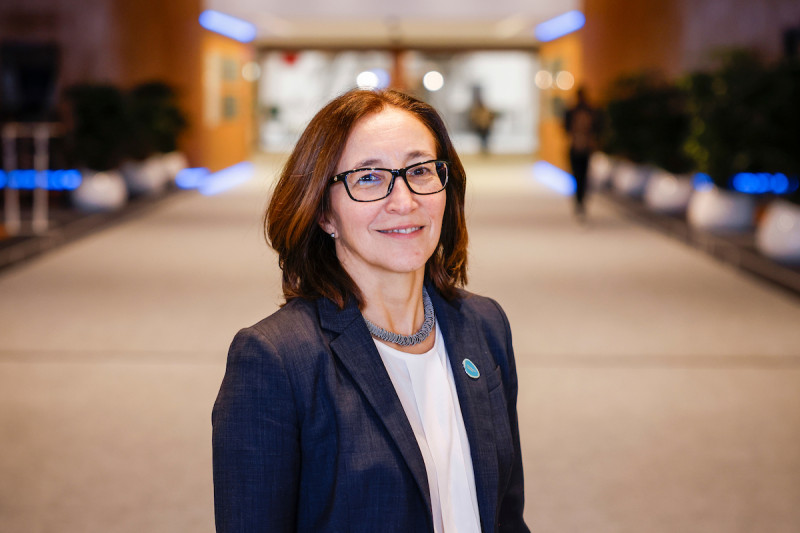
From Our CEO: A Game Changer
Virtually every aspect of life, it seems, is being transformed by artificial intelligence (AI). And nowhere is it more exciting than in the field of medicine.
AI has begun reshaping our approach to cancer, at every stage – from prevention and screening, through diagnosis and treatment, to post-treatment monitoring and drug development. But how can Europe become a leader in this area? That’s the underlying question in the European Commission’s ’Apply AI’ strategy, released earlier this month.
What’s becoming undeniable is that Europe must speed up its adoption of artificial intelligence. Other regions are moving quickly, and Europe cannot afford to slip farther behind. If we want to unlock the potential of artificial intelligence, the time to act is now.
The Commission’s new paper consists of many different proposals across many different fields. What caught my attention, though, is that healthcare is the first sector highlighted in the strategy. It recommends beginning with several European healthcare centres where AI can deliver more advanced screening and diagnosis for earlier and more accurate detection – especially when it comes to cancer and cardiovascular diseases.
We know that artificial intelligence, especially applied to imaging, is already offering revolutionary advances in cancer diagnosis and early detection. So, the Commission is eager to harness this potential by linking these AI-powered centres with the European Health Data Space and the EU’s digital infrastructures for cancer imaging and genomic data.
In breast cancer alone, AI models have been trained on hundreds of thousands of mammographic images, showing lesions as small as a speck of sand. Their ever-refined algorithms are providing remarkable precision, distinguishing suspicious areas that require closer investigation from those that can be safely left untouched.
We don't yet have more details about the Commission’s proposed new screening centres. But it’s an exciting work in progress, and a clear signal that the Commission is becoming serious about using artificial intelligence throughout the healthcare sector.
I know some of you will be thinking that this sounds much like an effort already begun: the European Digital Infrastructure for Cancer Imaging launched under Europe’s Beating Cancer plan. That’s why we must ensure that these different initiatives are well connected.
We also need to ensure that these various efforts proceed responsibly for patients and healthcare professionals alike. Patients need the latest, clear, relevant information to trust these technologies. They need to feel confident that their diagnosis is supported by new digital tools with an established record of accuracy, while healthcare professionals need the appropriate skills and capabilities to use these new technologies safely and effectively. Beyond screening, some clinicians are already starting to use AI to identify which therapy is the most appropriate for a specific patient.
These issues are currently being explored within ECO’s Digital Health Focused Topic Network, which has developed a paper on ‘Harnessing AI for Cancer Care in Europe: Opportunities, Challenges, and Policy Recommendations’. The paper will be released at the European Cancer Summit during a dedicated session where the policy recommendations will be discussed by a panel of experts
Artificial intelligence dovetails with ECO’s overriding mission to reduce the burden of cancer. We want to tap into all these rapidly expanding opportunities for better cancer care. But we also need a robust regulatory framework to guide us: a difficult balancing act, to be sure.
With best wishes,
Elisabetta
Elisabetta Zanon