-
Event
20 November 2026, The Hotel Brussels & Online
Advancing Collaboration, Skills and Person-Centred Care through INTERACT-EUROPE 100
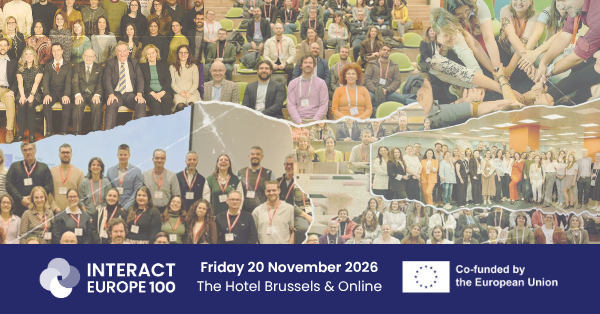
Bringing together Europe’s oncology community at a pivotal moment, this conference will showcase the achievements of INTERACT-EUROPE 100 while charting the next phase of inter-speciality cancer training across Europe. It offers a unique opportunity to transform the programme’s success into lasting, system-wide adoption, ultimately advancing cancer care and outcomes for people across Europe.
Read more
-
Event
20 November 2026, The Hotel Brussels
Quality of life is a key priority for anyone affected by cancer, but it remains insufficiently addressed in cancer research, care and policy.
On 20 November, the Quality of Life and Cancer Policy Forum will explore lessons from nine innovative projects and how cancer systems can be redesigned towards patient-centred care.
Taking place a day after the European Cancer Summit 2026 – and at the same venue – this high-level, implementation-focused event will bring together patient representatives, researchers, healthcare professionals, health system managers and policymakers to learn about the latest EU-supported initiatives and get empowered to drive meaningful change.
This event will feature:
- the EUonQoL project, developing a patient-centred unified tool for the assessment of quality of life among cancer patients and survivors – serving as its final policy event
- the projects of the Quality of Life - Patient-Centred Care Cluster of the EU Mission on Cancer – serving as their multi-stakeholder meeting
Read more
-
Event
18 - 19 November 2026, Brussels & online
Strengthening Cancer Care: Securing a Healthy, Equitable, Resilient and Competitive Europe
Amid political instability, economic pressure, and the risk of escalating conflict, discussions around Europe’s next multiannual budget are intensifying in Brussels and in capitals across the EU.
In this environment, addressing the growing burden of cancer is essential. This unrelenting disease is not only a public health priority, but a strategic investment in Europe’s resilience, social cohesion and long‑term competitiveness.
As Europe defines its political priorities for the decade ahead, health and cancer must be embedded at the heart of future investments. At this critical moment, the cancer community must champion a vision for a resilient, equitable and innovative Europe.
The European Cancer Summit 2026 will take place in Brussels & online on 18-19 November, followed by EU-funded project events on 20 November.
Read more
-
Event
05 November 2026, Online
The European Cancer Organisation (ECO) and the Canadian Global Oncology Network (CGON) co-sponsor this session on an under-recognised equity gap in transatlantic cancer control.
Sexual and gender minority populations face documented inequities at every stage of the cancer continuum, yet remain largely absent from global cancer control agendas. Bringing European and Canadian perspectives together, the session makes the case for inclusion as a global priority and introduces the Montréal Declaration as a replicable framework other jurisdictions can adapt.
A moderated panel of four speakers moves from the global evidence gap, through European and Canadian policy approaches, to practical tools, closing with audience discussion.
Read more
-
Event
29 October 2026, Online
People living with and beyond cancer often say that quality of life matters as much as clinical outcomes. Yet quality of life is still not measured consistently and their experience is frequently not reflected in healthcare planning or policy decisions.
On 29 October, the EUonQoL project will bring together patients, caregivers, healthcare professionals, policymakers and others to explore how quality-of-life measurement can become a stronger part of cancer care and decision-making across Europe.
The event will also launch the EUonQoL Policy Recommendations, setting out concrete actions to strengthen the use of harmonised, patient-reported data.
Read more
-
Publication
October 2026
How can Europe ensure that its investments in cancer research and care deliver lasting results? A new report from the European Cancer Organisation sets out a roadmap for a possible solution: creating a European Cancer Institute.
Read more
-
news
15 October 2026
As the European Parliament advances its work on the EU Biotech Act, leading cancer and rare disease stakeholders have warned that the legislation will determine whether Europe’s scientific excellence translates into timely and equitable access to treatment, or existing disparities become entrenched.
On 12 October, the European Parliament Intergroup on Cancer and Rare Diseases convened an expert dialogue with Stine Bosse MEP, Shadow Rapporteur and Co-Chair of the Intergroup, and Vytenis Andriukaitis MEP, Rapporteur on the EU Biotech Act and Intergroup Member.
Read more
-
news
12 October 2026
12 October, Brussels – Each year, 2.7 million people in the EU are diagnosed with cancer, and 1.3 million lose their lives to it. Five years ago, the EU responded by launching its Cancer Mission and Europe’s Beating Cancer Plan. Since then, it has backed an array of pan-European projects with the power to reshape cancer care and control. Among them:
Read more
-
Publication
October 2026
Policy recommendations on cancer and competitiveness
Europe is home to many of the world's leading cancer researchers, clinicians, scientific societies and healthcare institutions. European researchers continue to produce groundbreaking discoveries, develop exciting new technologies, and advance scientific knowledge. Yet too often Europe struggles to translate these achievements into rapid adoption, widespread implementation, and improved outcomes for patients. Scientific excellence alone is not enough.
Read more


